Almond milk, Kierkegaard, and a little Kombucha

Suddenly, I want to make my own almond milk. Why “suddenly?” Every morning I drink matcha latte made with soy milk, but this morning I am out of soy milk, so the time has come for backup. I have made almond milk only one other time in my life and it wasn’t good, primarily because it separated and I tried to thicken it with. . . things. It ended up a slithery goo, making the separating nut milk much more tolerable. But at that point, I didn’t have time to make it again. Much time has now passed. Today is the day to try again.

Almond Milk

1 cup almonds – rinsed well
Add enough hot water to cover them and let soak over night (8-12 hours)

After the soaking is done blend the following in a blender until completely liquified:

  • Soaked almonds, drained 4 cups water (different from that used for soaking)
  • 1 vanilla bean (cut in small pieces, or 1/4 teaspoon vanilla)
  • 2-3 dates (or other sweetener)
  • 1/4 teaspoon cinnamon (Note: Penzey’s cinnamon is wonderful)
  • Dash of sea salt

After blending, pour mixture through a mesh (preferably a nut milk mesh; pantyhose are not quite as romantic in cooking) Store in a container that is easy to stir since it separates.

So that’s the Almond Milk, and frankly, it is wonderful! I made a little cup of matcha latte with it and, well, it was fantastic! Now the question is what to do with the three cartons of soy milk that are now in the refrigerator since Gordon went shopping at Costco while I was making this milk! This is where Kierkegaard comes in. After boiling the water and letting the almonds soak, I turned to a book by Merold Westphal entitled Kierkegaard’s Concept of Faith. I had read quite a lot of Kierkegaard’s writings while doing my PhD at Emory, but not much since then. My current colleagues will be gathering for a book club around the book this afternoon, so I have a little more to read before going. According to Westphal, Kierkegaard’s concept of faith has many facets, like a diamond. In fact, Westphal counts twelve – definitions of faith. I’m not sure this is the time or place to identify all of them, except to come closer to what faith might be for me. So I will discuss a few of them:

  • Faith is a “task of a lifetime.” Like love or doubt, faith is one thing now and something quite different years from now, but it is still faith. There is nothing that comes after it, except a deeper form of itself. I like this idea, but somehow the word “task” does not fit with this concept. A “task” is something one checks off. It does not linger over time unless one fails at fulfilling it. So “task” is not the correct word, in my mind.
  • Faith is “trust in divine promises.” It is not simply resignation, but has an element of hope in it.
  • Faith is “the highest passion.” Passion is understood here to be more than emotion or feeling. It has to do with character and the core of one’s being exerting its energies toward what is meaningful. The musician is passionate about music; the dancer about dancing. The person of faith is most passionate about faith; it is “the highest passion.” Interesting, – not the “greatest” passion, but the “highest.”
  • Faith is “the willingness to be oneself before God.” This one stumps me – to be “oneself” before God, not just to be “before” God, but to be a certain way before God. It seems that for Kierkegaard it is important to have a personal relationship with a personal God. Hmmmm.

That leaves Kombucha. Gordon just came in my office and announced time for our Sunday night film together, so my story of Kombucha will have to wait….

How long ? Fried Rice and other things

How long can you leave an egg in the refrigerator? How long will your floor stay clean? How long will you live? How long will the world continue on as it is? This question (“How long?”) is one of the most difficult because, generally, you never know the answer ahead of time. You only know it looking back, if looking back is even possible. In the case of one’s own life it isn’t. But when the answer is certain, peace accompanies it, most of the time. In the case of the egg, the answer is certain: 3-5 weeks in the refrigerator after it is purchased. But vary that in one or more ways and that number changes dramatically, especially if you freeze it. This question matters now because Gordon is currently making Fried Rice, using the last two remaining eggs in the refrigerator. They are outdated by a couple of days. Does it matter? Generally I don’t eat eggs, but I know that I will want to share in the feast of his Fried Rice when he is done with it, so it matters. Thus, when I discover a new website about the shelf life of various foods, (StillTasty website), I search the egg first. Why? Not because it will affect the current meal. Gordon finished cooking the Fried Rice while I was writing this blog, so I stopped and ate with him. Delicious. No, I search the egg first because I have always wanted to know. Knowing the answer will not help me personally at this point, but I want the answer for “How long?” and the egg seems the context in which to do it. The same website has a section entitled Your Questions Answered. Here the question of whether an egg is good after its expiration, along with many other questions, is answered. Answered! I also discover that potatoes should not be refrigerated since the cold affects the sugar content, causing them to taste different, and that keeping them at 45-50 degrees F will help them last up to three months. Now that’s an answer worth knowing. In fact, I should have known it already. There was a reason my parents kept (and still keep) the potatoes in the potato cellar or the “root cellar.” The point is, there are answers and they are easily accessible, once you find the right source. But other questions are not as easily answered. I participate regularly is an internet program called Searching for Answers. Notice the difference. Your Questions Answered versus Searching for Answers. The first sounds like an event, the second like a process. The first is about food; the second is about God. Perhaps some questions are more easily answered than others. Perhaps, even if we had the choice, we would prefer it that way.

Fried Rice – from the Scotsman’s hands

Ingredients

Directions


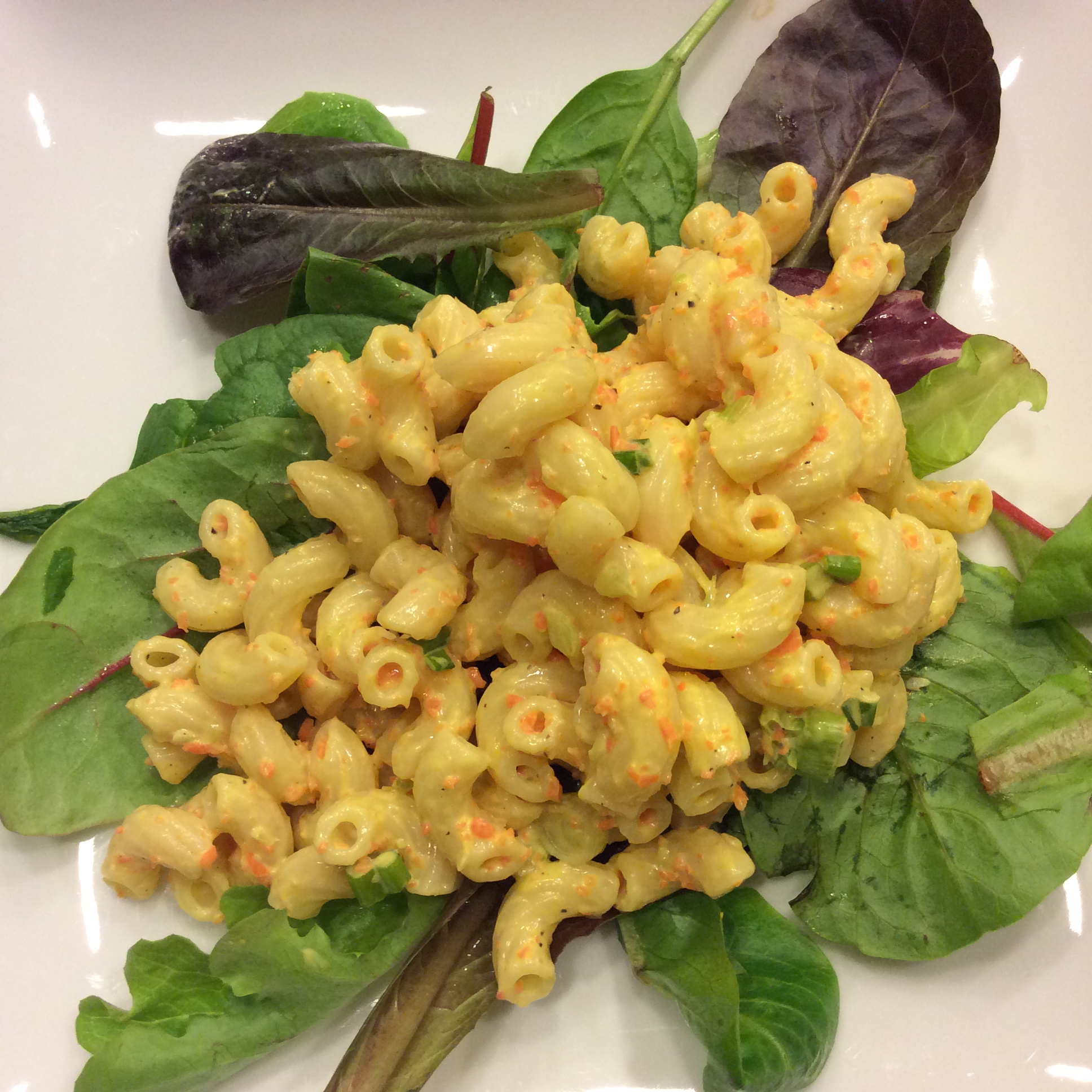
“Tangy” macaroni salad

We wanted something light and refreshing for supper dinner supper tonight, along with the watermelon in the frig and Gordon’s “steak fries” that he bakes every now and then (they’re like old friends that come around often). I LOVE macaroni salad, but it is often too goopy for me, so this recipe is my attempt to solve that. As I review this entry I suddenly insert “dinner” where the word “supper” was in the first sentence since a friend heard me say “supper” recently and wondered what the word meant. She chalked it up to my Southern upbringing. What? Supper is not known and loved? Growing up, we ate the largest meal at noon (thus “dinner”) and a lighter meal “supper” in the evening. If “dinner” and “supper” mean the same thing, then I wonder how I will talk about the light meal we had tonight? “Dinner” is too formal a word for macaroni salad, watermelon and steak fries. So I Google the word. That’s what we do these days when we have questions. More on that in another “recipe.” Anyway, I found a site – a Harvard research study  – that addresses the issue. It seems there are many ways of thinking, so I go back to the first sentence and reinstate “supper.” All seems right with the world. I guess I know where that puts me in the Harvard study…It reminds me of the time a friend (different friend) asked why I pronounced “ask” and “asked” the same way. I was gobsmacked. I never realized I did that and it stunned me that I could have mispronounced a word as pervasive as “asked” for so long. Being a public speaker, it completely baffled me that nobody had said anything until then. So, I was “gobsmacked,” “stunned” and “baffled” – the first of which is my favorite word – for now. I learned it from my Scottish father-in-law and it works so well. With the word “smacked” embedded in the word, it says exactly how it feels to be that surprised – gob”smacked” in the face by awareness. Even to this day I have to slowly pronounce “ask-ed” to say it correctly, sounding like a child learning phonetics. Anyway, we had “Tangy Macaroni Salad” and it was great, a perfect “supper” dish. And don’t forget the spring salad part of it since it adds to the taste of the salad. In this case, the greens are not just there for looks.

photo

Ingredients

Directions


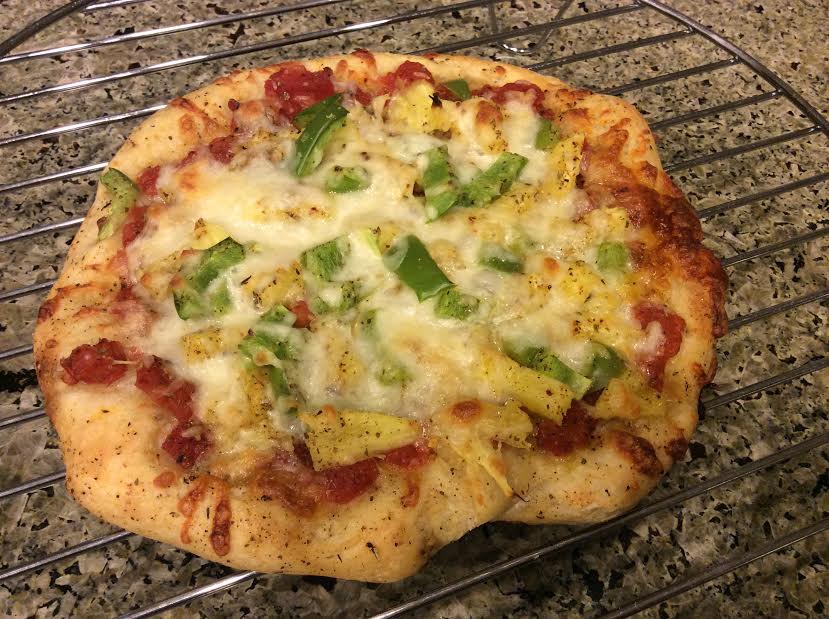
Perfect Pizza

Homemade pizza is tricky, unless you have a Trader Joe’s nearby and can use their Pizza Dough (Plain Vegan), Then its easy and the “homemade” crust is perfect. PizzaWhen I went to cut the pizza my dear husband had the entire pizza in his hands and “going down” before I could even cut it. There’s the proof of success! As he grabbed the pizza I grabbed the camera…photo 1 (1)Mmmmm….I heard the low humming of gastronomic satisfaction. photo 2Then I turned the camera on the dog sitting nearby. Even Cypher, our Weimaraner, was enthralled by the scene, eternally waiting for a share in the human enterprise…. Cypher and eternally disappointed. CypherI knew what he was thinking, “Why you and not me?! Why would I be left out? When is it coming my way?” The existential questions abounded. Wait, that’s what I would have been thinking. Here’s what he was thinking, “Mmmm, me, me, me.”

Ingredients

  • Pizza dough – one plain Trader Joe’s pizza crust (bagged and in the refrigerator section) – You can also make your own or use an already prepared crust (such as Boboli Pizza Crust).
  • Olive Oil (enough to lightly brush on dough to help it become crunchy)
  • S & W canned tomatoes – petite cut (drain liquid and discard; slightly mash the tomatoes)
  • Fresh pineapple – cut in small pieces
  • Green pepper – cut in small pieces
  • Savoy Savory Italian Dressing Seasoning (I purchased this seasoing in Chicago, but I’m sure you can get it online or use regular Italian seasoning). The Savoy seasoning has a slightly sweet taste, which goes well with the pineapple/pepper pizza. If you use regular Italian seasoning, you may want to add a little sugar to it.
  • Mozzarella or vegan cheese (optional – I like my pizza without cheese)

Directions

  1. Preheat oven to 475 degrees F. Place a pizza stone in the oven unless you leave yours in the oven all the time like I do. If you are using a pizza stone, it must heat for about 30 minutes.
  2. Separate the pizza dough into three equal pieces (if you want smaller pizzas, or leave as one piece if you want a larger pizza).
  3. Roll out on parchment paper (as thin or thick as you want it).
  4. Lightly brush the dough with olive oil.
  5. Spread enough tomato on the dough to reach the edges. Sprinkle Savoy seasoning on it.
  6. Place pineapple and green pepper pieces on the tomato layer and sprinkle more seasoning.
  7. Place the pizza and parchment paper on the pizza stone and cook for 8-10 minutes (if on pizza stone) and longer if not on a pizza stone.
  8. Enjoy and remember that every meal is the opportunity for another story.

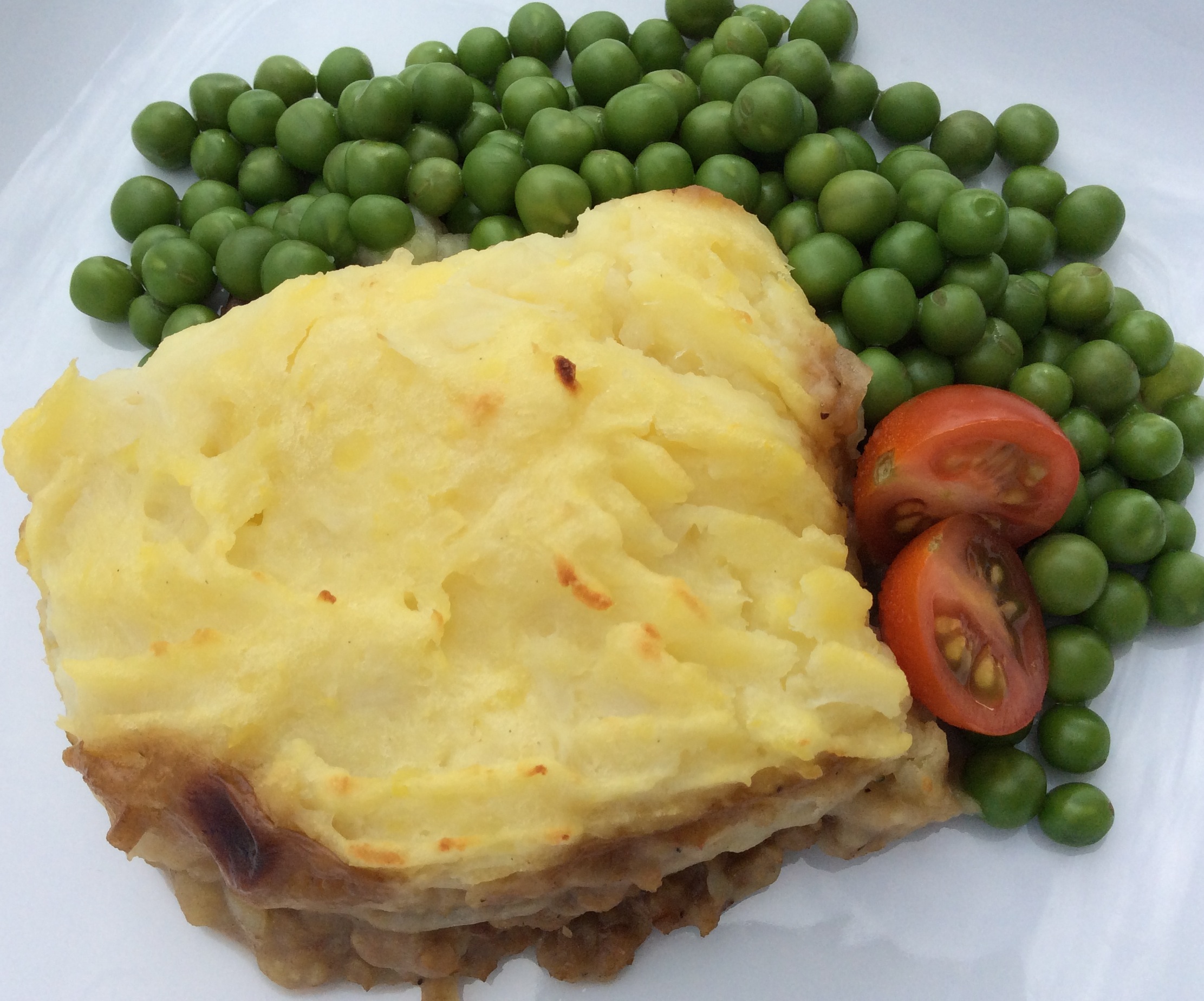
Shepherd’s Pie (Vegan)

Shepherd's Pie

This morning I wanted to make a hearty Sunday breakfast and had some frozen vegetarian meat that could be used (veggie meat that I made and froze). Looking through cookbooks (an exercise I love about as much as I love reading books of any kind – perhaps more so), I got this idea for a Shepherd’s Pie. It fit perfectly with my husband’s Scottish background, but I hesitated to go this direction since Shepherd’s Pie is known as a mechanism for using leftovers (“dump and bake”) and I didn’t want that. So here’s what I did. My best critic (my husband) LOVED it. Since it passed the taste test, I thought I would share it here. We had it for breakfast, so it was not actually served with peas. I added them for the photo afterwards. While my various cookbooks gave me ideas, this recipe is all mine….

Ingredients

Potato/Cauliflower Layer

Potatoes: 6 large potatoes peeled and chopped into 1 inch cubes
Cauliflower: 1/2 head (chopped into 1 inch chunks)
Butter (vegetarian): 1 Tablespoon
Soymilk (unsweetened): 1/2 cup
Chicken seasoning to taste
Salt to taste

Veggie meat/vegetable Layer

Grapeseed oil: 1 Tablespoon
Onion: 1 medium onion chopped
Garlic: 3 cloves minced (or two large cloves)
Veggie meat: 1 1/2- 2 cups crumbled
Mushrooms: 2 cups sliced white mushrooms
Red pepper: 1/2 cup chopped (about 1/2 of one red pepper)
Brussels sprouts: 1/2 cup chopped fresh (optional) – This is about 3 brussels sprouts
Water: 2 cups
White flour: 1/4 cup
Chicken seasoning (vegetarian): 1 tablespoon
Thyme: 1/2 teaspoons
Salt to taste
Pepper to taste

Directions

Preheat oven to 375 degrees F.

Top potato/cauliflower layer

  1. Place chopped potatoes and cauliflower in a saucepan covered with water. Boil until soft (about 20 minutes). Drain.
  2. Mash together with butter, soymilk, chicken seasoning and salt to taste.

Bottom veggie meat/vegetable layer

  1. Place grapeseed oil in frying pan and add onions. Cook until tender (about 5 minutes). Add garlic and cook for 1 minute more.
  2. Add veggie meat, mushrooms, red pepper, and brussels sprouts to the skillet. Simmer until tender. Add salt and pepper to taste.
  3. Mix together the water, chicken seasoning, thyme, and white flour. Blend in a blender. Pour over veggie meat mixture, adding salt and pepper for more taste (if needed) and simmer to thicken.

Putting it all together (in a casserole dish)

  1. Pour the veggie meat layer on the bottom of a 9×13 casserole dish.
  2. Scoop the potato/cauliflower mixture on top of it and spread to the sides of the dish.
  3. Bake 20-25 minutes until the top browns a little. You may want to briefly turn the oven to “broil” in the last few minutes to give it a browned top.

Notes and future ideas

  • You may wonder what the need is for baking this since everything is already cooked. Baking it allows the flavors to mix throughout. Besides, there’s something warm and wonderful about a baked dish, especially for breakfast. It also yields a browned top.
  • What I would like to try next time is adding a THIRD layer of Tofu scramble on the top to make a thoroughly breakfast dish.

Tofu Omelet Sheets

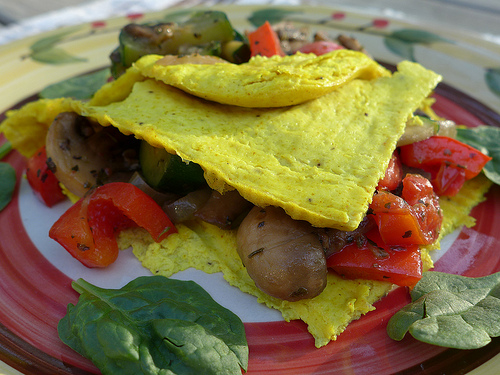
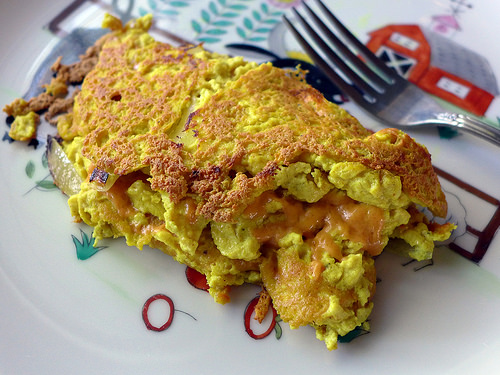
OK. So here we are on the second day after arriving home from our Europe trip and there are SIX new vegan cookbooks on our doorstep, thanks to Amazon for swift deliveries. I decide to cook breakfast out of The HappyCow Cookbook: Tofu Omelet Sheets. Why “sheets?” I wonder. Why not just “omelets”? But soon the answer unfolds as I smooth the batter over the jellyroll pan. Actually, not really a jellyroll pan, because I don’t have one. I thought my kitchen had everything until discovering its lack of this item. A quick google search helps me to see that an upside down cookie sheet, drip pan or silicone baking sheet will suffice, so “on you go” as my Scottish father-in-law says.  As I smooth the tofu batter on the “pan,” my husband Gordon happens into the kitchen. He stops and stares. “Why all the fuss with baking it first? Why not just put it into the frying pan?” I stare back thinking, Now that’s a good question, but I don’t respond because I have a certain loyalty to using a first time recipe. He continues, “It would be so much easier to use real eggs. Baking and then frying seems like an awful lot of work for an omelet. Can I cook yesterday’s leftovers in case it doesn’t work out?” His solution surprises me since yesterday’s breakfast was also an experiment  – a black bean and quinoa burger with potato hash. Being sure that by tomorrow he will request THESE leftovers, I press on.  In reality, while it may look difficult, it really is quite easy, even fun. If I can figure this out, I will be so happy with myself. It is the kind of thinking that accompanied my chemistry and physics experiments in high school. In the end, the tofu omelet tastes great, but looks a little disheveled, like Kelly’s below (only a little better, sorry Kelly). The omelet sheets are a bit crumbly, difficult to peel off the parchment paper. But Gordon surprises me by asking for seconds. There are no leftovers. None. There is an even funnier side. In my attempt to find the recipe online (since I enter all recipes into Evernote and I don’t want to type it myself from the book) I come across a blog that makes me laugh out loud: Vegan daemon:

http://www.easyvegan.info/2014/05/22/tofu-omelet-sheets-from-the-cornbread-cafe/comment-page-1/#comment-3480093

Apparently Kelly had the same struggles I did with this recipe. Compare the two photos in her blog, The first photo seems to be a clipping (not hers) and the second is how hers turned out.  Not sure, but it corresponds to what I experienced with the recipe. Next time I would increase the elasticity (add more cornstarch and liquid?) and cook it a little longer.

TofuOmelet1

The goal

On her blog Kelly says, “I kind of wonder whether the recipe was written incorrectly…Further experimentation necessary..It was kind of messy, but I blame that on an inadequately sized spatula and my own impatience…”

No, Kelly, it is not the spatula or your patience, unless we both have the same spatula! However, I agree that there is hope. The recipe is almost correct, so let’s keep at it. Here’s the recipe as it is in the cookbook:

Tofu Omelet Sheets
(adapted from The HappyCow Cookbook: Recipes From Top-Rated Vegan Restaurants Around the World, p77)

TofuOmelet2

Kelly’s omelet

Serves 6

For the omelet:
1 1/2 blocks firm tofu
1 1/2 T arrowroot (or cornstarch) mixed well with 1/4 cup water
1 T nutritional yeast
2 t onion powder
1 1/4 t sea salt
1 t garlic powder
1/2 t black pepper
1/8 t turmeric (for color)
Oil for greasing and frying

For the filling:
Here you can have fun. Use your favorite veggies (I like to use a combination of bell peppers, mushrooms, onions, spinach, fresh tomatoes and spinach), vegan cheese, or anything else you like in omelets.

Directions:
Preheat oven to 350 degrees. Put all the ingredients (except the oil) into a food processor and blend until smooth.

Lightly oil a jellyroll pan (13×18), and line it with parchment paper. Scoop the tofu mixture into pan, and spread tofu evenly to the sides. Take another piece of parchment paper, lightly oil one side of it, and place oiled-side down on top of the tofu. Even out the mixture a little easier with this top sheet on–use your hands to gently pat and make sure there are no uneven spots.

Bake for about 12 minutes, checking after 10 minutes. It’s a good idea to rotate the pan back to front after about 6 minutes. Remove the pan from the oven when the parchment paper turns yellow.

Once cool, take off top piece of parchment paper. This is where it tends to crumble or separate. I found it easiest to peel it off. You can also run a butter knife around the edges to separate the omelet from sides of pan and gently remove the bottom piece of parchment paper. Make 1 vertical cut down the middle and 2 horizontal cuts, making 6 even omelet sheets. Heat a lightly oiled pan over medium flame. Place the omelet onto the pan, smooth-side down. Sprinkle filling ingredients on half of the sheet and fold. Top with more cheese and cover until hot. Remove and serve.

Challenge from here: to cook it again using this recipe and, if the difficulty remains, review other tofu omelet recipes and alter this one accordingly.

Hint: making the sheets and then frying them without trying to make an omelet results in perfect scrambled eggs. Looks exactly like it!


Oatmeal-Maple Scones – Best Scones Ever!

Ingredients

Minimally adapted from Joanna Chang’s Flour: Spectacular Recipes from Boston’s Flour Bakery + Cafe

1 1/2 cups (210 grams) unbleached all-purpose flour
1 1/4 cups (125 grams) old-fashioned rolled oats (not instant or quick cooking)
1 1/2 teaspoons baking powder
1/4 teaspoon baking soda
1/4 teaspoon kosher salt
1/2 cup (50 grams) pecan halves, toasted and chopped
1/2 cup dried cranberries or craisins (original recipe calls for golden raisins)
1/2 cup (1 stick, 114 grams) cold unsalted butter, cut into 8-10 pieces
1/2 cup (80 grams) cold heavy cream (I use milk+melted unsalted butter at 3:1 ratio e.g. 3/4 c. milk to 1/4 cup butter)
1/2 cup (160 grams) maple syrup
1 cold egg

Maple glaze
1 cup (140 grams) confectioners’ sugar
3 tablespoons maple syrup
1-2 tablespoons water

Directions

Position the rack in the center of the oven, and heat the oven to 350°F.

Using a stand mixer fitted with the paddle attachment (or a handheld mixer), mix together the flour, oats, baking powder, baking soda, salt, pecans, and cranberries on low speed for 10-15 seconds, or until combined. Scatter the butter over the top and beat on low speed for about 30 seconds, or until the butter is somewhat broken down and grape-size pieces are still visible.

In a small bowl, whisk together the cream, maple syrup, and egg until thoroughly mixed. On low speed, pour the cream mixture into the flour-butter mixture and beat for 20-30 seconds, or just until the dough comes together. It will be fairly wet.

Remove the bowl form the mixer stand. With a rubber spatula, scrape the bottom and sides of the bowl to ensure that all the dry ingredients are mixed into the dough. Using a 1/3-cup dry-measuring cup, drop mounded scoops of the dough onto a baking sheet, forming 8 scones and spacing them 2-3 inches apart. At this point, the unbaked scones can be frozen, tightly wrapped in plastic wrap, for up to 2 weeks. Proceed as directed, baking directly from the freezer and adding 5-10 minutes to the baking time.

Bake for about 30-40 minutes, or until the cones are golden brown on top. Transfer to a wire rack to cool for 30 minutes.

To make the maple glaze: While the scones are cooling, in a small bowl, whisk together the confectioners’ sugar, maple syrup, and enough of the water to make a smooth, pourable glaze. You should have about 1/2 cup. The glaze can be made ahead and stored in an airtight container at room temperature for up to 1 week.

When the scones have cooled, brush the tops evenly with the maple glaze and then serve.

Makes 8.